THE PROGRAM / 3 × 3 WEEKS
Arrive. Understand. Make change part of life.
18 online sessions, three personal module conversations and practical steps between meetings. New cohorts start in spring and autumn: two per year for each module. Exact dates will follow.
Book an introductory call
WHAT IS INCLUDED
A clear rhythm. Room for your daily life.
- Nine weeks, three connected modules
- Tuesday and Thursday: around 2½ hours online each
- One 55-minute individual conversation per module
- A journal and challenge book for personal reflection
- A Zoom follow-up for integration
From €555 per module. The three-module, nine-week program starts at €1,332. Terms for the next cohort are confirmed before booking.*
The father circle is a separate offer. Additional coaching, the retreat and merchandise are separate choices.
Included: starter box, workbook, journal and challenge book, access to the provided program videos, forum and network group, plus one year of the father circle. Starter box contents, access details and the start of the access year are specified before booking. Recordings of personal group conversations are not automatically promised. Merchandise and retreat are separate.
From €555 per module. Book all three together and pay €444 per module: from €1,332 in total. Retreat and additional individual coaching cost extra. Each module includes two weekly live sessions (5 h in total), the weekly online father circle and one personal 55-minute conversation. The father circle adds around 2 h and is also open separately.
After modules 1 and 2, a shared online wrap-up day closes each stage. After all three modules, the optional retreat is planned as a shared completion. There is no half-time retreat. Wrap-up dates are confirmed with the cohort.
Your rhythm
Online sessions: Tuesdays and Thursdays at 19:00 Berlin time (Europe/Berlin, CET/CEST), approximately 2½ hours each. Father circle: Mondays, around two hours; time to be announced. Spring and autumn cohorts: exact start dates will follow.
What supports you
Included: starter box, workbook, journal and challenge book, access to the provided program videos, forum and network group, plus one year of the father circle. Starter box contents, access details and the start of the access year are specified before booking. Recordings of personal group conversations are not automatically promised. Merchandise and retreat are separate.
Reservation & payment
A €111 deposit reserves your place and is credited towards the agreed total price. You can arrange a single payment or five monthly instalments. Deposit allocation, due dates and payment method are confirmed in writing before booking.
SHIVA SHIFT offers non-clinical coaching, support through personal change and self-exploration. It is not medical or psychotherapeutic treatment and does not replace assessment or necessary therapy. Individual outcomes are not guaranteed. Scope in detail
The nine weeks. Step by step.
Explore the module weeks at your own pace.
Begin with module 1, followed by modules 2 and 3. You can preview every week; joining later is discussed personally. Two cohorts per year for each module are planned for spring and autumn. Connected dates are confirmed before booking.
MODULE 1 / SPRING & AUTUMN
Arrive. Find your footing.
WEEK 1Starting point & direction

What's happening now — and what would you like to change?
Look at your current situation, your time with your child and the areas that drain your energy. A personal vision board makes your wishes visible and turns them into achievable steps.
In your everyday lifeWrite down what matters to you as a father and where you want to begin this week.
Practice outline: around 45 minutes of yoga within a 150-minute session. Practices and duration adapt to the group.
Your starting point can include your own upbringing: what care did you experience, what was missing, and what would you like to offer your child? You choose what to share.
Starting point & vision — Understand your starting point and turn self-efficacy into practical steps.
WEEK 2Regulation & relief

A pause between stimulus and response.
Learn to notice tension sooner. Conscious breathing, gentle movement and body awareness become practical tools you can use even between appointments.
In your everyday lifePractice a brief pause before sending a message or having a difficult conversation.
Practice outline: around 50 minutes of yoga within a 150-minute session. Practices and duration adapt to the group.
We explore early signs of tension and small ways to orient to the present. This creates room to notice withdrawal, harshness or the pressure to keep performing.
Regulation & resilience — Recognise stress signals, respond calmly and build support.
WEEK 3Body & consistent practice

Give stability a daily form.
Individual exercises become a manageable practice. Yoga and movement are adapted to your experience and circumstances. Notice what actually helps you rather than chasing an ideal.
In your everyday lifeChoose a small, regular time for movement or rest.
Practice outline: around 60 minutes of yoga within a 150-minute session. Practices and duration adapt to the group.
Body & strength — Body practice as a reliable foundation for fatherhood.
MODULE 2 / SPRING & AUTUMN
Understand. Recognize patterns.
WEEK 4Patterns & role models
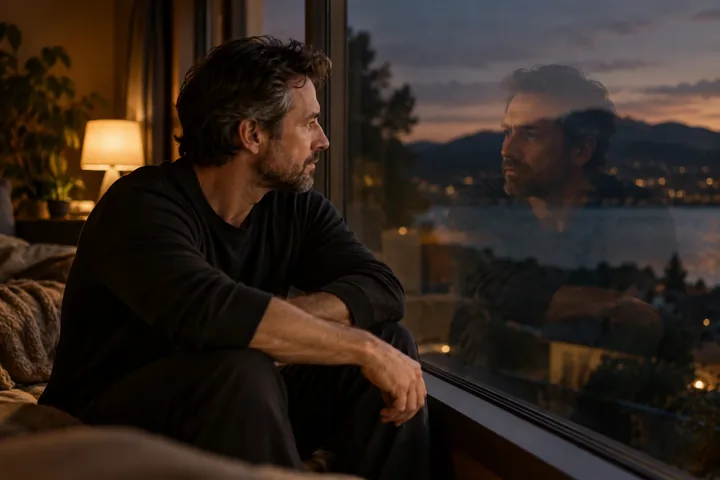
What story do you tell yourself about yourself?
Explore the expectations you hold about men, fathers and yourself. Archetypes are used as prompts for reflection. Your own experience remains the starting point; rigid ideals of masculinity do not dictate the answers.
In your everyday lifeWrite down a belief that puts you under pressure and a more helpful alternative.
Practice outline: around 70 minutes of yoga within a 150-minute session. Practices and duration adapt to the group.
Father and mother wounds, inner-child reflection and inherited roles have an explicit place here. Archetypes such as Warrior, King, Lover and Magician help us explore protection, responsibility, connection and insight as flexible qualities. We ask what once protected you and what you would like to approach differently today.
Archetypes & men’s work — Explore roles, develop strengths and take conscious responsibility.
WEEK 5Attention & inner calm
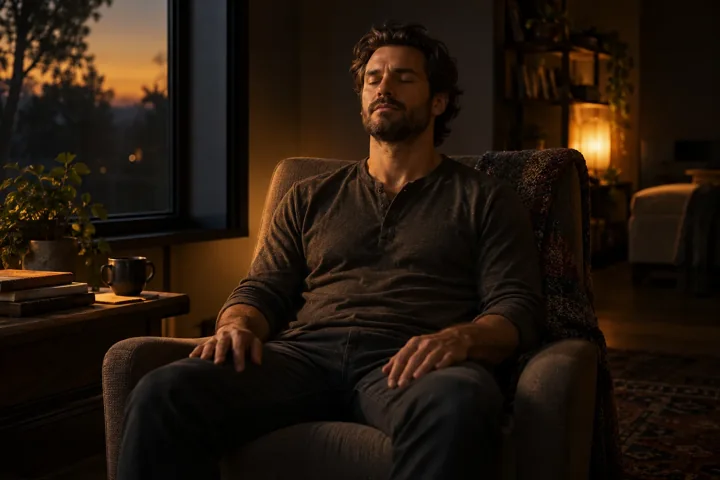
Be present without having to fix everything immediately.
Deepen mindfulness and meditation. Guided rest practices and Yoga Nidra create space to notice your thoughts and slow everyday life down for a moment.
In your everyday lifeGive a shared moment with your child your undivided attention.
Practice outline: around 80 minutes of yoga within a 150-minute session. Practices and duration adapt to the group.
Inner-child reflection can mean meeting a present feeling with kindness and naming a need behind it. We stay with what feels manageable now; memories do not have to be searched for or relived.
Presence & attention — Listen, act deliberately and stay available to your child.
WEEK 6Stability & boundaries

What supports you when things get difficult?
Strength-building yoga, grounding and somatic exercises deepen physical and inner stability. Reflection and conversation help you notice and express your boundaries clearly.
In your everyday lifePrepare a clear, respectful boundary for a specific everyday situation.
Practice outline: around 90 minutes of yoga within a 150-minute session. Practices and duration adapt to the group.
We distinguish a protective boundary from control. Body-based exercises, grounding and intentional pauses connect this reflection with noticing your choices today.
Stability & boundaries — Practise sovereignty: stand clearly, respect boundaries and stay connected.
MODULE 3 / SPRING & AUTUMN
Live. Practise new paths.
WEEK 7Clarity & alignment

From a wish to a conscious decision.
Return to your goals: which still fit? Which reflect other people's expectations? Reflection, journaling and conversation help you connect your decisions with your values as a father.
In your everyday lifePlan a manageable step that is genuinely within your control.
Practice outline: around 100 minutes of yoga within a 150-minute session. Practices and duration adapt to the group.
What would you like to keep from your family, change or begin anew? You shape your own picture of fatherhood, with room for mistakes, support and growth.
Clarity & direction — Connect values, goals and practical decisions.
WEEK 8Habits & new responses

Recognize old loops. Practice different paths.
Look at behaviors that hurt you or your relationships. Practice alternative responses and discuss setbacks without letting them define you.
In your everyday lifeTry a different response in a recurring situation and reflect on it.
Practice outline: around 110 minutes of yoga within a 150-minute session. Practices and duration adapt to the group.
Using everyday conflicts, we practise recognising familiar protective responses and reconnecting: announcing a pause without disappearing, taking responsibility without attacking yourself, and returning to your child after a mistake.
Patterns & self-efficacy — Understand old reactions and practise new responses in daily life.
WEEK 9Integration & moving forward

What stays with you when the program ends?
Gather the practices and insights that have become dependable for you. Build a personal plan for life as a father, with routines, support and room for adjustments.
In your everyday lifeWrite a practical plan for the first weeks after the program.
Practice outline: around 60 minutes of yoga within a 150-minute session. Practices and duration adapt to the group.
Integration also means practising what you have learned in small moments of relationship: listening, respecting boundaries and reconnecting after conflict. We consider what support could help you continue.
Integration & responsibility — Choose your next step and take sustainable routines with you.
WHAT TO EXPECT
More than talking about change. Practise it.
Body-based practice is our starting point. Breath, awareness, honest reflection and community come together as a practice for daily life, with room for both strength and vulnerability.*
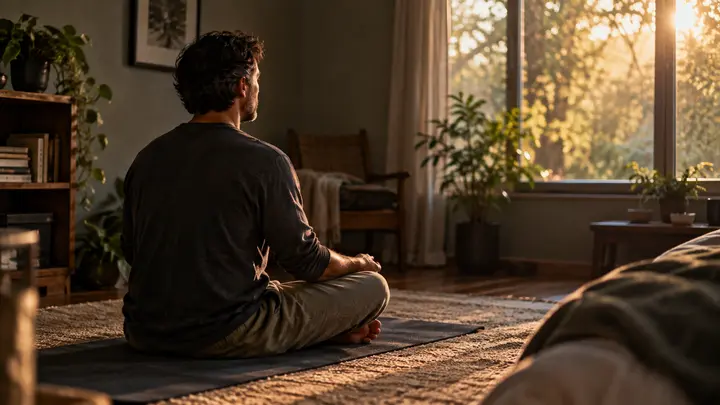 EXPLORE THE PRACTICECome back to your body. Feel more at home in yourself.Read more
Come back to your body. Feel more at home in yourself.
Your body is more than something that has to perform. It is also where you can notice tension, fatigue, limits and vitality. Yoga, mindful movement and simple somatic exercises form a central part of our shared practice.
We start accessibly and build gradually. Hatha, Vinyasa, Kundalini and Yin offer different approaches, from movement and alignment to quieter holds. You do not need to be flexible or demonstrate anything. A smaller movement or a pause is a valid choice.
This is a practical form of agency: noticing what works for you and responding to it. Body-based practice is not trauma treatment and does not promise to release stored wounds. We adapt around discomfort; medical questions belong with qualified professionals.
EXAMPLES FROM THE PRACTICE
- Body awareness and contact with the ground
- Accessible yoga and movement sequences
- Noticing limits and building your own practice
 EXPLORE THE PRACTICEYour breath. More room to respond.Read more
Your breath. More room to respond.
You explore how breathing feels in different situations. Gentle awareness, guided breathing practices and periods of rest can become part of your personal toolkit. The aim is not the most intense experience, but an approach that fits you.
Some people connect breathwork with spiritual meaning or a shift in perspective. There is room for that without expecting or guaranteeing a particular experience. More intensive practices require a separate conversation about suitability, boundaries and support; they are not the same as the short exercise on this page.
The preview here stays gentle, without forced breathing or breath holds. You can stop and breathe normally at any time. Discomfort, fear or dizziness is not something you have to push through.
EXAMPLES FROM THE PRACTICE
- Noticing your own breathing
- Gentle regulation and intentional pauses
- Reflecting on and integrating experiences
 EXPLORE THE PRACTICETrain your attention. Be more fully here.Read more
Train your attention. Be more fully here.
Mindfulness here means paying closer attention to your experience. Awareness also means recognising habits, inner commentary and automatic responses. Meditation is not a competition to switch off your thoughts.
We use guided attention, quiet moments and restorative practice. Your eyes can stay open. If turning inward feels uncomfortable, you can orient to the room, move or pause. Your feedback matters more than an idealised picture of meditation.
What begins on the mat can become a question in daily life: am I really here? Am I listening? Do I need a pause? Presence includes feelings and vulnerability. It does not require you to look calm all the time.
EXAMPLES FROM THE PRACTICE
- Observing attention and thoughts
- Meditation and guided rest
- Presence in time with your child
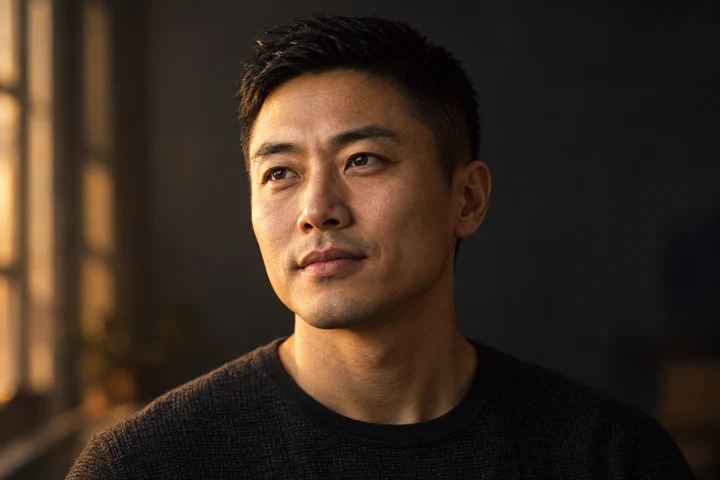 EXPLORE THE PRACTICEQuestion the roles. Find your own expression.Read more
Question the roles. Find your own expression.
Archetypes are images to reflect with, not diagnoses or templates for correct masculinity. We explore qualities such as care, clarity, courage and creativity. Each can help or become distorted: clarity can turn into control, care into abandoning your own needs.
Shadow work means looking honestly at what you would rather not notice: avoidance, harshness, seeking approval or believing you must carry everything alone. It is an invitation to reflection, not a shaming verdict.
Sovereignty means responsible self-leadership here. You can hold boundaries and remain emotionally open. Vulnerability and strength are not opposites. What matters is translating your values into everyday actions.
EXAMPLES FROM THE PRACTICE
- Archetypes as flexible reflection tools
- Shadow sides and role expectations
- Boundaries, values and responsible self-leadership
 EXPLORE THE PRACTICEUnderstand relationships. Find new ways to connect.Read more
Understand relationships. Find new ways to connect.
We look at how you experience closeness, distance, conflict and needs. Attachment patterns are prompts for discussion, not fixed labels for you, your child or other people in your life.
Terms such as inner child, father wound or mother wound invite questions about early experiences and present needs. Nobody has to disclose memories or relive distressing events. Attachment wounds and trauma can be acknowledged, but their treatment is not something this coaching promises.
The connection to fatherhood stays practical: expressing a boundary without devaluing someone, reconnecting after conflict, listening and taking responsibility. We explore your choices without rushing to explain or diagnose other people.
EXAMPLES FROM THE PRACTICE
- Closeness, distance and attachment patterns
- Inner-child reflection and personal history
- Communication, conflict and reconnection
 EXPLORE THE PRACTICEYou do not have to do it alone. Keep growing together.Read more
You do not have to do it alone. Keep growing together.
You meet fathers who do not need the same life story to take you seriously. Listening, sharing and choosing silence can sit alongside each other. This is not a competition to appear especially deep or especially strong.
Body-based practice and self-regulation remain personal experiences; community can offer additional support and co-regulation. We discuss boundaries, respectful interaction and what you choose to share. A group is not a substitute for individual therapeutic support.
The planned framework includes a forum and network group. The network can grow with each cohort and module. Access, moderation and the start of the included father-circle follow-up are clarified before booking; this page does not pretend that a finished online platform is already operating.
EXAMPLES FROM THE PRACTICE
- Father circles and respectful conversation
- Support, boundaries and voluntary sharing
- Forum, network and integration
 EXPLORE THE PRACTICEPlant traditions. Make informed choices.Read more
Plant traditions. Make informed choices.
Plant medicine is not a blanket term for harmless or automatically suitable substances. We look at the meanings of plant traditions in different contexts and the expectations attached to them. Information is not the same as a recommendation to use something.
Taking part in the program does not require substance use. The content of each cohort is clarified before booking. This page promises no specific applications or supplies and recommends no doses, self-medication or healing effects.
Suitability, possible risks and interactions cannot be established through a spiritual narrative. Medical questions belong with qualified professionals. Boundaries and a considered no have as much space as curiosity.
EXAMPLES FROM THE PRACTICE
- Cultural context and personal expectations
- Choice, boundaries and informed questions
- Distinguishing reflection from treatment or self-medication
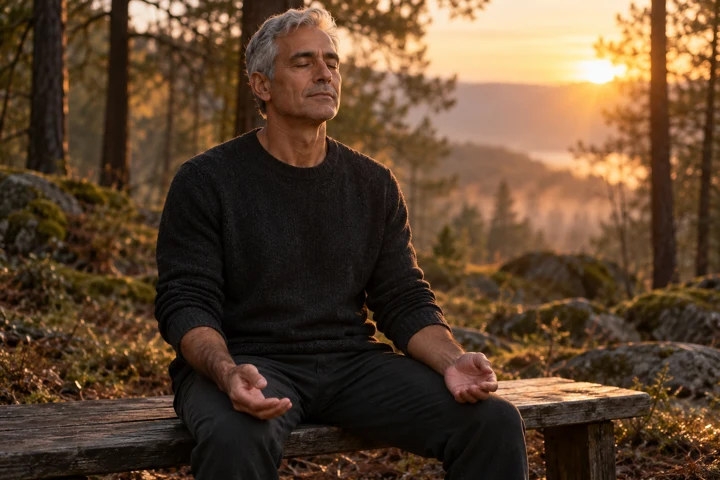 EXPLORE THE PRACTICEEnergy work. Explore your experience.Read more
Energy work. Explore your experience.
Energy healing and energy work mean different things to different people. Guided body awareness, meditation and intentional periods of rest may have a place in the program. We name the actual practice and explore whether it feels appropriate for you.
This is an experiential, spiritual approach, not a scientifically established healing treatment. It does not replace medical or psychological care. You can opt out at any point; no special sensation or worldview is expected.
Yoga, somatic movement, breathwork and meditation remain the practical foundation. Plant medicine is discussed separately; participation does not require substance use.
EXAMPLES FROM THE PRACTICE
- Guided body awareness and inner attention
- Optional meditation and spiritual reflection
- Making sense of experiences in daily life
SHIVA SHIFT offers non-clinical coaching, support through personal change and self-exploration. It is not medical or psychotherapeutic treatment and does not replace assessment or necessary therapy. Individual outcomes are not guaranteed. Scope in detail

Time for perspective. Space for connection.
FOUR DAYS / BALTIC COAST PLANNED
Arrive together, practise morning and evening yoga, talk, walk and cook together. The retreat is the voluntary in-person completion of your program, deepening connections from the online sessions. Venue and dates are still being planned.
Separate from the online program, not yet a fixed price. Accommodation and self-catering costs are confirmed before booking. Arrange and pay for your own travel. Sauna, external events and other extras may cost more.
What stays after the program?
A Zoom follow-up after some time apart gives space for integration. We explore which steps help and what you want to keep practising. Further exchange and possible community gatherings are agreed together.
Aftercare: a Zoom follow-up, forum and network group help maintain connection. One year of the father circle is included. Additional meetups are not a guaranteed inclusion.
Book an introductory call